Leadership Roundtable: Building High-Performing Teams in the Age of AI
Executive Mastermind Dinner • Chicago
August 15, 2025
Facilitated Discussion
Executives and Senior Leaders
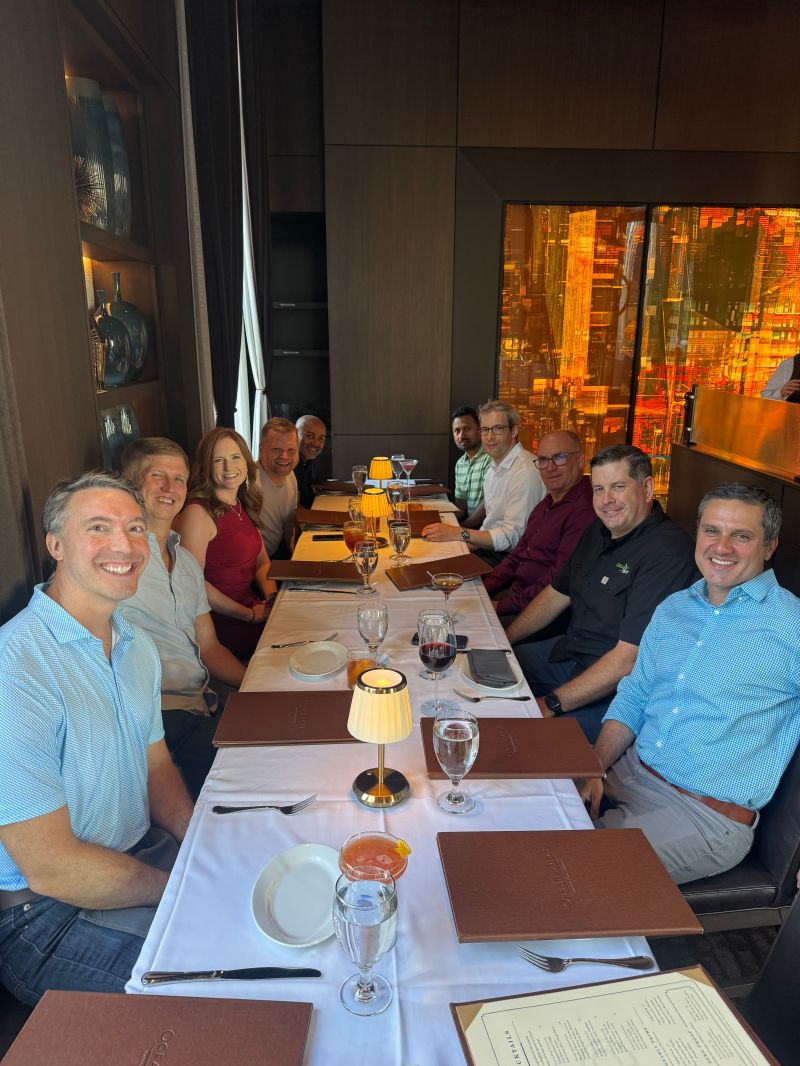
A moderated table discussion on GenAI applications, speed and specificity in AI projects, balancing automation with human oversight, and how AI creates space for deeper strategic thinking.
Key Themes
- •Speed and specificity in AI initiatives
- •Balancing automation with human oversight
- •The evolution of technical roles in the AI era
- •AI as a strategic enabler, not a dictator
- •Building trust through human validation
- •The future of work and strategic thinking
The Evening
I had the incredible opportunity to moderate a table at the Women in Tech Dinner at The Hoxton, Chicago, hosted by the Innovative Executives League. The topic was "GenAI & AI Use Cases" — a conversation that felt both timely and essential in today's rapidly evolving landscape of artificial intelligence. What struck me most was how grounded the discussion was. These weren't theoretical debates. These were leaders wrestling with real decisions: Which AI projects matter? How do we move fast without losing our way? How do we keep humans in the loop when the technology is moving so quickly?
Speed and Specificity: the Three-month Rule
One of the most actionable takeaways was the importance of speed and specificity in AI projects. The group consensus was clear: any AI initiative stretching beyond three months risks becoming obsolete. The pace of technological change is simply too fast. This doesn't mean moving recklessly. It means being ruthlessly focused. Pick a targeted, high-impact use case. Solve it. Learn from it. Move on. Broad, unfocused projects that promise to "transform the organization" often become sunk costs — expensive lessons in why strategy matters more than technology. The critical insight: align AI with your business strategy, not the other way around. AI should augment and enhance what you're already doing well. It shouldn't dictate your direction.
Automation Needs a Human Touch
A recurring theme was the tension between automation and human involvement. AI excels at automating repetitive work, freeing teams to focus on what they do best. But you can't remove humans from the equation — especially in sensitive domains like healthcare, customer service, or financial decisions. Context matters. Human validation is what builds trust, particularly with chatbots and AI-generated recommendations. The best systems avoid frustrating loops where users get stuck in automated dead-ends. Instead, they incorporate human touchpoints strategically — moments where a person can step in, understand the situation, and make a judgment call. One leader put it perfectly: "We're not replacing people. We're replacing the tedious parts of their jobs so they can do the thinking."
Technical Roles are Shifting
We also discussed how AI is transforming what it means to be a developer. The shift from pattern-building to prompt engineering is real. Developers will increasingly guide AI systems rather than write every line of code. But their oversight will always be essential — they're the ones who understand the system deeply enough to catch when something goes wrong. Security is another area where AI shines. Pattern detection can identify anomalies and safeguard systems in ways humans can't match at scale. But adoption won't be uniform. Different industries and customer segments will move at different speeds. Companies need to account for that variance in their planning.
AI Creates Space for Strategy
Here's what I found most compelling: when AI handles the labor-intensive, mundane work, humans can focus on deeper strategic thinking. That's the real win. It's tempting to chase AI for novelty. But thoughtful planning and trust-building are what separate the winners from the rest. An AI-positive mindset — where AI is a tool to enable human capabilities rather than replace them — will shape the workforce and customer experiences we build going forward.
The Bigger Picture
What made this conversation special wasn't just the insights. It was the group itself. Women leaders thinking critically about how to integrate AI into their organizations without losing sight of what matters: strategy, trust, and the humans who make decisions. As we navigate this transition, the questions we ask matter more than the answers we find today. Because the answers will change. But the principles — speed, specificity, human judgment, strategic alignment — those will endure.