You Belong in STEM: Overcoming Bias and Building Your Future
STEM Women in Tech • Chicago
November 8, 2025
Keynote
High School Students
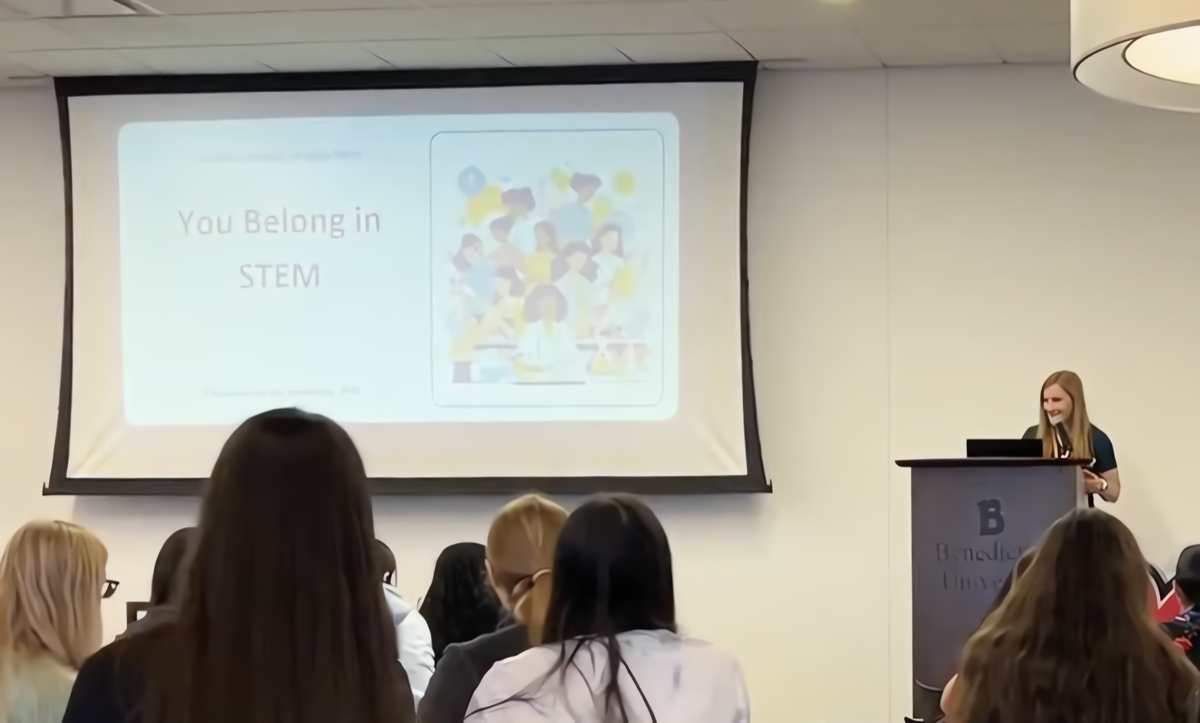
A keynote on belonging in STEM, overcoming bias, and building a career on your own terms.
Key Themes
- •Belonging and self-doubt in STEM
- •Recognizing and challenging bias
- •The cost of shrinking yourself
- •Navigating systemic barriers
- •Strategic career decisions
- •The importance of women in solving global problems
The Talk
When I looked out at that room of high school students, I didn't see kids trying to figure out their futures. I saw scientists, engineers, doctors, and inventors. The world's biggest problems are waiting for the solutions you'll build. But here's what I also know: some of you are already doubting whether you belong here. And that doubt isn't a reflection of your ability. It's a reflection of a system that wasn't built with you in mind.
The Moments That Shape Us
I've been questioned in ways that had nothing to do with my credentials. At a programming meetup, someone assumed I was there with my boyfriend. I've watched ideas I contributed get credited to men. I've experienced the particular flavor of dismissal that comes when you're smart but also visible, when you're analytical but also stylish, when you refuse to be less of yourself. For a long time, I told myself a story: geeky girls couldn't have it all. You had to choose. Be the smart one or the seen one. Be the technical one or the human one. Shrink yourself to fit. That story was a lie. And it cost me years.
What the Data Actually Shows
The numbers are stark. Women make up 26% of the STEM workforce. In engineering, it's 12 to 15%. The wage gap is real, especially for women of color. And there's this invisible work — the mentoring, the emotional labor, the bridge-building — that goes unrecognized and uncompensated. But here's what matters more than the statistics: even high-performing girls doubt their belonging in STEM. That doubt isn't random. It's shaped by representation, by who gets recognized, by whose ideas get heard. And that can change.
The Real Cost of Shrinking
When you make yourself smaller to fit in, you don't just limit your own potential. You limit what's possible for everyone. Every time you stay quiet when you have something to say, every time you downplay your expertise, every time you apologize for taking up space — you're not just affecting yourself. You're reinforcing the system that made you feel like you had to shrink in the first place. STEM doesn't need you to be less. It needs you to be more. It needs your full self — your curiosity, your creativity, your perspective, your voice.
Strategic Navigation
I made a choice to leave corporate and build my own thing. Not because I was running away from the challenges, but because I was running toward something I could control. I wanted to work in a system where my value was clear, where my decisions mattered, where I didn't have to negotiate my worth. That's not the only path. But whatever path you choose, choose it strategically. Understand the systems you're entering. Know the rules. And then decide which ones you're going to follow and which ones you're going to change. Big industry needs women who understand their worth. Women who won't accept less. Women who know how to play the game and when to flip the board.
What Happens When You Show Up
Every time you're the only woman in the room and you show up anyway, you change that room. Every idea you share, every question you ask, every time you refuse to shrink — you expand what's possible for the next person. In ten years, imagine yourself leading a project that matters. Making a discovery. Building something that solves a real problem. That's not a fantasy. That's what happens when you decide you belong. Because you do. You belong in STEM. Your contributions matter. And the future is waiting for you to build it.